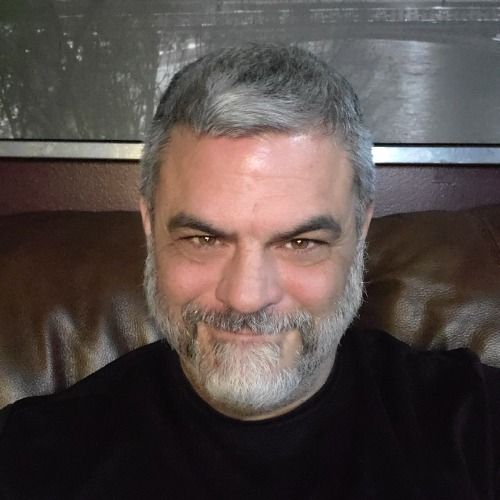

Ep 381 - Disinformation Nation with Mickey Huff
**Will we see you at Macro ‘n Chill on Tuesday? You’re invited to join our online gathering where we listen to the episode together and share our insights and questions. May 26 at 8pm ET/5pm PT. Use this link to register https://us06web.zoom.us/meeting/register/UHE6NoSDRbibqXYAeJJ8gQ
Disinformation is neither an accident nor excess; it is the normal functioning of late capitalism’s media apparatus. Our friend Mickey Huff, executive director of Project Censored, talks with Steve about the machinery of modern propaganda, algorithmic control, and billionaire-owned media ecosystems. Their conversation highlights key tensions of a base and superstructure in decay. Mickey lays out the historical continuity of media manipulation, and they bring up surveillance as a class weapon and electoral distraction as a dead end. (Mickey may be the first guest to mention Gilens and Page before Steve does.)
From Silicon Valley oligarchs and tech monopolies to the collapse of local journalism and the rise of curated realities, Steve and Mickey frame today’s information war as a struggle over who gets to shape “common sense.” Critical media literacy is not about neutral fact-checking but about exposing whose interests a narrative serves.
Mickey Huff is Executive Director of Project Censored, President of the nonprofit Media Freedom Foundation, and Distinguished Director of the Park Center for Independent Media at Ithaca College
Find his full bio at https://www.projectcensored.org/mickey-huff/
@ProjectCensored on X
Transcript
All right, folks, this is Steve with macaron cheese. And, you know, I can't help it. I'm not a very positivist kind of dude when it comes to, you know, politics of the day.
I'm not exactly, you know, my heart isn't going boom, boom, boom because of candidates. My heart isn't exactly enthralled with the narratives that we are constantly inundated with.
We've talked at length, I mean, at length, folks, about cultural hegemony.
We've gone through the theoretical frameworks of Gramsci, but we're going to talk about how it's executed today, and we're going to talk about some of these super villains controlling our corporate media and the tech platforms. And you can never get enough information on this because, folks, this is what is going into your brain. This is what you're absorbing.
This is what you're formulating your worldview from.
Even under the best of circumstances and the smartest of people and the most, quote, unquote, critically aware, are not immune to the power of the algorithm and. And the corporate media that pervades so much of what we consider to be common sense and just quote, unquote, news.
's like Lex Luthor and an old:Mickey, welcome to the show, sir.
Mickey Huff:Thanks so much for having me back on the program. It's always great to have a conversation with you, so I appreciate it.
Steve Grumbine:You got it, man. I do appreciate this as well.
I'm personally feeling the friction of trying to push away the narratives of just trying to retain my own person, you know, and not allow the programming, if you will, to really disrupt and shade, you know, how I view the world. And, you know, I don't want to say it's good or bad. I just want to say that I want it to be real. I want to know what's really going on.
And with these superpowers, if you will, controlling all of the media, all of the platforms, social media platforms that we live and die on. Sadly, I wish that wasn't the case because I remember a time, I'm gray enough to remember a time when it didn't exist.
I remember talking to friends and call waiting and stuff like that. Right now, it's just such a different world. But.
But it's scary because everything from worrying about phishing attempts in your email to, you know, there's nowhere to hide, there's no safe haven now. And the media, maybe it's always been horrible, maybe it has, I don't know. But I do know this. I can't believe a thing I read anymore.
And I'm sure there's always a filament of truth in it, but there isn't the kind of. I don't know how to. It's not informing me of anything. It's actually controlling me.
It's kind of manufacturing my consent, you know, through osmosis, I guess, aerial osmosis through, through my headphones, through my small little screen on my smartphone, et cetera. And these super villains that you cover so well in all your work.
I want folks to understand because I do believe people put the tinfoil hat on and say, I think they're just full of it, man. They, this can't be real. It really can't be real. The stuff we're listening to is horse crap, but in reality, I mean, it is oligarch driven.
And these things, they're not doing good things, they're doing quite evil things. And tell us all about it, man. Help paint the picture.
Mickey Huff:Well, yeah, I hear you, man, and you're right on in these regards.
You know, certainly on the media messaging, in terms of the manufacturing of consent, there's a lot of really curated narratives going on through these companies. And again, this is historic.
This problem is, again, everything in the present seems like it's the worst ever because we're here, you know, but these challenges, on one hand, they've been with us a long time, but on another, as we've gotten into the digital era, you know, the challenges have morphed when you have, you know, basically a dozen, or, I'm sorry, half dozen, fewer than half dozen major corporations kind of increasingly gobbling up the media. And then you have the big tech sector, you know, kind of merging where media and mass media has sort of been gobbling up journalism.
Censored's been around since:And, you know, the occasion for our discussion, thanks so much for inviting me on again, is really to kind of talk about why we need projects censored now just as much or more and maybe in different ways after 50 years. And so the ownership issue of who owns.
I mean, look, you talk about the supervillains, whether it's the people at Palantir, you know, Peter Thiel, Alex Karp, whether it's Curtis Yarvin, the Dark Enlightenment character, these sort of technocratic anti democratic overlords that think we need to have sort of an AI tech CEO as president. I mean, this is, this kind of transhumanist stuff is actually quite, it's quite the thing out in the San Francisco Bay area and Silicon Valley.
I was there for 25 years. I'm in upstate New York now. But that's been the trend.
And if you go back, by the way, and if you look at people like Peter Thiel, he was talking 15 years ago about this out in the open, and other folks in the tech sector were saying, hey, look, we're not the most popular characters when we go out and speak. Right. I mean, again, you've been, you know, you were alluding to. Was it the Legion of Doom, as it were?
These folks are almost like comprising a real life Legion of Doom. And their outlook on things is really bleak. And their disdain for humanity is writ large.
And they also happen to be wantonly surveilling us at nearly every turn. VPN surveillance. Right. The group Free Press. Not the Free Press, I'm sorry, Freedom of the Press Foundation.
I'm going to talk about my friends@freepress.net too, who are not the same as Bari Weiss's the Free Press, but these organizations are our allies at Project Censored. They're doing amazing work cataloging and pushing back against some of these things. Like, you know, a recent story on VPN surveillance. Right.
We, we thought VPNs were there to try to protect privacy. Well, tech companies are finding ways around that.
Palantir is now monitoring, you know, all the farmers and it wants to monitor all the data on farming and farmers.
ley, as Neil Postman wrote in:I just think it's really important, man, to go back to the roots and go back and look at where things were. And if you look at back when Project Censored started in the mid-70s, that was in the ashes of Watergate. That was after the Nixon resignation.
That was after.
Right after the church committee hearings exposing government lies and corruption and spying and you know, again, specifically the church committee stuff that showed the CIA manipulating media. So there's a lot of evidence for the historical roots for the things that we're going to be talking about now.
But what I often find is that in the present, you know, Gore Vidal used to quip that we lived in the United States of amnesia. But it's hard, I don't know if it's amnesia because that implies that people were aware of it before and forgot it.
And this kind of underside of our history is not taught as much.
And you have to remember, like the students that I'm teaching now, they were born after 911 and you know, they were young when a lot of the post 911 changes came in. But those were on an historical trajectory that goes back to post World War II.
And I do think it's significant to understand that architecture because it set the stage for where we were heading. You might remember a book that Nolan Higdon and I did a number of years ago called United States of Distraction.
It was media manipulation in Post Truth America and what we can do about it. So we have prescriptions of things and maybe we'll, you know, revisit some of those. But we started the book How Did We Get Here?
And we have a quote from Lao Tzu that says, if you do not change direction, you may end up where you are heading. Are we there yet? And again, I would suggest that when Carl Jensen started Project Censored, we actually did live in a more robust media ecosystem.
w, Ben McDickian in the early:Carl was already ahead of the curve on news media literacy.
And he said, look, we hope that we could trust the establishment media, what people call mainstream, but it's Nothing mainstream about a billionaire press, which we now have, and we'll get to that.
But the main thing that Carl was saying is that, like, yes, we hope the New York Times and Washington Post can report on things, but we know they don't all the time. We know that's probably not possible. And we know also that they pursue different agendas by their owners and advertisers and others.
going all the way back to the:So it's a very paternalistic view of the role of the Fourth Estate, Carl, along with the history of, you know, the muckraking journalists in this country going back to Ida Tarbell, Lincoln Steffens, Upton Sinclair, many others from over a century ago, more than a hundred years ago, those people thought that the job of the Fourth Estate wasn't to be owned but to be servant in service to the public and in particular be adversarial and hold people in power to account. That's the main theory of press freedom. That is why the First Amendment is so important.
And I think that the news literacy stuff that Carl started by looking at the independent alternative media is a real exercise in teaching students that there are other places to get information and we have to learn to think critically and independently. And we need to ask why our other major news outlets won't cover some of the stories that you read about in the independent press.
And that's where he got the idea for Project Censored, because he looked at Watergate and said, well, why did that take so long to get out? What if some of the other Nixon scandals were reported sooner? Might that have made a difference now?
Again, we could segue and get into a conversation about electoral politics, but, you know, we, we don't need to go that route right now, per se, because, you know, as the Princeton Northwestern study from 13 years ago now clearly showed that while elections and voting on things in a local way can make some differences for people for sure, nationwide, the public in their study had no lever to like reach the power on Capitol Hill. And that's something that sounds disconcerting and I don't want to sound cynical.
I'm just saying that their study was a, you know, a landmark sort of yardstick as to how much our democracy or democratic republic has really disappeared in so many ways. And that's not to pretend that it was ever perfect. I mean, we know that the founding we only had white male property owners and Christians voting.
I mean, the system was set up to be contained and controlled and as we just now have seen recently at the Supreme Court, more rolling back of voting rights. So we know that the elites in this country have never really trusted the public.
And we know that in many ways sometimes elections can look like necessary illusions.
But where I want to go with this is beyond that issue, is that regardless of what we're thinking about when it comes to elections, we should have a press that accurately reports about what the limitations are. And, you know, where you have to go to get that kind of information is the independent alternative press.
The corporate media cheerleads these things like horse races, and they don't really get into detail.
They don't get into details about policy and they don't really connect the dots between what the public wants and what candidates are saying or what they're actually doing. Worse yet. Right, but the thing is, is that I think when it comes to the press, they're more interested in personalities.
They're more interesting in scandals and conflicts that don't really lead to demonstrable reforms and changes. It's just like Schadenfreude, a gotcha journalism. And it's not like the muckraking journalism that we need to inform the public.
Because at the end of the day, regardless of what decaying state we might be in as a republic, the public needs to understand the historical roots of how and why neoliberalism has wrecked such havoc on our public institutions and how our private institutions have encroached upon us more and more.
And then that's when we get to what you were mentioning earlier about the so called supervillains, whether it's Jeff Bezos at the Washington Post telling us we need more favorable coverage of, you know, free markets and billionaires because they just apparently aren't doing that enough. You know, we have Elon Musk buying Twitter X, you know, controlling that algorithmically to pump out his dark enlightenment philosophies.
And again, you know, we can go down.
Larry and David Ellison are maybe more of the recent kinds of threats that we See, with the Warner Brothers discovery, you know, merger with Paramount, Skydance, you know, that means a takeover of cnn.
Not only are we seeing, you know, the corporate media in this regard, these billionaire press, these folks, we're seeing them tighten their grip even more and they're now also even attacking the late night comics, right? That's been going on for a while now. We're treated to like another spell of these things.
And again, you know, if you want to follow along with this, people in the independent press were writing about this. Allan McLeod for Mint Press News wrote last fall, the seven richest billionaires are all media barons.
And you know, we made a lot of hay about that story as being a really important story, but frankly, I didn't see it get picked up many places at all. And, but I mean, this goes right to the core of it.
When you have these people buying up, it's no coincidence that the wealthiest people in the world are involved in media because we're now back to where you started with the media is able to shape or mold public impressions or opinion. I mean, it's as if we're still acting like the billionaires care about, you know, what the public thinks.
Their actions show more and more that they don't. But it's still important for them to control the media, to control the narrative at least.
So people are distracted enough following along with things that maybe don't matter.
Again, the Ellison family, the people that own Oracle, right, These are the folks that were pushing for the sale of TikTok from China so that an American consortium could control it. Why did they want to do that? Well, because they said the quiet parts out loud.
They said because young people were seeing information on TikTok that was not being reported on news that was coming out of places like Gaza. And they were learning about things that the corporate press in this country didn't cover.
And the main reason that they were pushing for TikTok is because they said, well, it's radicalizing the youth.
And I said, well, is it TikTok or is it, you know, on the ground reporting where Israel is killing a couple hundred journalists on top of tens of thousands of people. We don't have to get into that can of worms. I'm just talking about what were the reported facts that they, the IDF even now agrees on.
And this comes back again to ownership. And by ownership you can control, algorithmically or otherwise, what people hear, read, see. And back to Postman and Huxley.
We increasingly allow ourselves to be misled.
We allow our own confirmation bias to settle us into a post truth kind of conundrum in our society where we're really in the midst of an epistemic crisis as far as knowing where to go on who to trust, while simultaneously we are seeing unprecedented assault from the highest levels of our government to attack even major media outlets. You know, they're going after nonprofits and indie press, too.
But to be brazen enough to be going after these large media behemoths ones, by the way, that they're helping orchestrate changed ownership in. So it's like it's not enough that you have the Ellisons and you have all these Trump allies owning major media platforms. They want it all.
And if you don't, you know, have fealty to them or kiss the ring, as Seth Stern at Freedom of the Press Foundations, you know, has been prone to say, then they're going to go after you. Whether it's lawfare, frivolous lawsuits, intimidation, media companies fearful that they're going to get regulated.
Brendan Carr at the fcc, jawboning and literally using the FCC as an ideological weapon to revoke ABC licenses. I mean, this is authoritarianism, I'm sorry to say that word.
And I know it's not popular probably in some circles to say that, that people don't want to believe that, you know, our government in its current iteration is. We could say it's dysfunctional, but it's functioning very well for the people that own it.
And the government is supposed to be owned of, by and for the people. It's not supposed to be for the same billionaires that run Silicon Valley and the rest of the economy. But I'm afraid that's where we are.
And I'll take a minute here, man, because I'm yammering on, because there's so much to say, but, you know, I'd like you to come in here and, you know, give us another direction to go.
Steve Grumbine:Yeah, you've been spot on. And I think that what you said is really important, you know, for me.
You know, I think about, okay, here's this problem, okay, you guys teach media literacy, critical media literacy, which is really important. But for the people out there that don't realize this is an assault on us, right? Like, this is literally warfare, information warfare.
And the manufacturing of consent for us is not benign. It is not a benign act. And then what?
I think the biggest concern when I hear this stuff is that we slowly but surely allow ourselves to accept the fake reality sold to us, like you were saying, and then we are no longer living in truth. It's beyond post truth. Our lives are like a lie at that point even.
And the material reality of our world is we stop using our brain to see the world as it is and we start acting as if these narratives are real. Like what is that real impact to human beings? Right. I guess you could say it's like a cult of sorts of. I mean, we are in an involuntary cult or.
Or is it voluntary?
Mickey Huff:Yeah, that's a great question.
You know, and I think it's been a long, slow process, which is what we wrote, you know, and we talk about the state of the press, free press in our books every year. You people can learn more@projectcensored.org about that.
And we try to encapsulate well what's been going on and shifting since the last time we, you know, we've published these reports, these annual reports which Carl was doing, you know, every year on the top underreported or censored stories.
And we continue to do that as well as do other forms of critical media literacy analysis on junk news, propaganda, solutions, journalism, media, democracy in action. We look at solutions and positive things too.
But this issue that you are pointing out is I think crucial because I found myself saying something in class the other day.
I teach a course called Fighting Fake News, Press Freedom Disinformation in the Post truth World where we really look at this stuff and we're at the end of the semester and they've had to read some of these things and as the semester goes on in real time, there's just example after example after example of these things happening that are forms of fake news, black, gray, white propaganda, omission, sliding of content, the big lie, flat out falsehoods.
But we're now seeing an explosion of fake account like not real people that are AI constructed and they have accounts and they are now being inserted into all kind of social media posts on Instagram and other places where hundreds of thousands of people are liking this blonde MAGA woman, you know, who is a quote influencer. And it's like she's not even an actual person, man. I mean she's totally not literally, I mean by the literal definition of fake, not person, right?
In this context. And this stuff is blowing up all over the place. And what this clearly illustrates is that we have a critical media literacy education deficit.
And media literacy is only really taught in about. I mean, it's taught if teachers teach it, but it's not part of Common Core. And last I checked, I think only six states had a mandate to teach at K12.
And there's such a. The problem is that we have to be teaching children at younger ages.
And instead of what some other countries have done, where there may be a little more attuned to this or thought it out, we just unleashed the tech sector, just unleashed as savior the screen solution. Like the screen that takes over the classroom.
And that's been going on for, you know, a couple decades, but it's really accelerated through the pandemic when everything went to screens and we were all beholden to technologies to continue our jobs in school and live our lives and so on.
And they really got the hooks into us, whether it's the tablets or the personal phones and surveillance devices tethered to us all day, that we're on for six to eight hours, or the other screens beaming whatever the companies that own them want us to see the rest of the day. Back to your issue again. It's also as if that these elites have manufactured a crisis of ignorance and they want to sell AI to us as the solution.
You know, it's almost like a self fulfilling prophecy toward the transhumanist dark enlightenment that's being pursued by people like Musk and Thiel and Yarvin and Karp and so on back to the Legion of Doom. Right? So I. And again, I don't. Tinfoil, hats aside, man. I, I am not talking about some, you know, I'm not talking about this as a cartoonish cabal.
I'm talking about it as the wealthiest people in the world that want to preserve and cement their power and influence. And media is a sure way to do that. Propaganda to control the narratives. Who's the good people? Who's the bad people? Who's the enemy today?
We've always been at war with east, you know, Eurasia. It's going back to George Orwell. Oh, yes, we're now to the stage where 2 and 2 is 5. And that was the party's final command, right?
Where people in office now will literally lie to our faces and not even blink twice when they're called on it or called out. And. And now we have a sitting president that actually calls people names. Go ahead. I'm sorry.
Steve Grumbine:The worst part of that is that people will say, hey, look, they're just being pragmatic. In other words, every time they lie to our faces, it's like, hey, look, the lie is more pragmatic to say.
And I hear this all the time when I'm like fighting back and I'm screaming, this is a flipping lie. And they're like, no, no, no, she's just being pragmatic, Steve. You got to understand, this is the world they live in. You gotta. You just. This is just.
It's just pragmatic, being pragmatic, and the amount of willful ignorance it takes to cut that slack. And I look at politicians who lie like we all mean. When I was growing up as a kid, my father said, you know how you can tell a politician's lying?
I said, no, dad. Ho. Your mouth is moving. There you go.
Mickey Huff:I remember that. I remember that thing. You know, it's like the Jorge Santos effect, man.
It's the guy who was the representative from New York that, I mean, just lied on the regular, was finally caught up with him and sentenced to about seven to eight years in prison. And Trump commuted his sentence. So there's not any consequence. I mean, this is someone that even went through the courts, was convicted, was.
I mean, that's a pretty heavy sentence, seven some years. But it was wiped out just, you know, by the waving of the wand and the pen from the White House. This is what I mean. So even.
This is something that I hit on back to my classroom when I was talking about the fake AI people, like, the actual fake people. I told them that this shouldn't be normalized.
And I caught myself saying that in class and saying, y' all weren't around, you know, right after 9, 11. And that's when a lot of this stuff started creeping in. And then the MySpace, Facebook, social media stuff in the digital era.
And instead of teaching people how to be in this new world, we didn't keep up with media literacy education. We just threw these devices into people's hands, unregulated, unstudied.
And now all the studies that have been coming out over the years, including this year, have just shown how many detrimental effects there are to screens, digital technology, mass surveillance, data harvesting, mental health issues. I mean, I could go on and on.
You know, we're now seeing major studies from neuroscientists coming out saying handwriting and cursive writing is a major important skill for neural pathways and brain development. And we basically wrote it out of the curriculum. Jesus. I mean, that's what I'm getting at. When I get into that. Is it by design?
It's not a grand conspiracy, but if you start connecting the dots and you start seeing what's been systematically been happening across the institutions, it clearly doesn't benefit we, the people.
And it makes people easier, not harder to manipulate and to control or to just disenfranchise and have people either so disgusted or so cynical, they don't even participate in their local communities, which can have tragic results. We are seeing some positive things with pushbacks from local communities around AI data centers.
People are starting to wake up about some of the consequences that that actually has for people in the environment.
But, you know, as we saw in Maine, despite the fact that people don't want those things, they're steamrolling laws saying, well, you're not allowed to ban those, or we got to at least talk about that or have one here. I mean, they're already building them everywhere.
And it's already been proven to be an exercise in environmental racism because oftentimes they're building these things in poor or marginalized community areas where maybe people don't have as much time to participate in things happening because they're working all the time, or they miss the city council meeting because they have two jobs and they didn't realize something was getting rubber stamped without their approval until it was already done. Because 25% of the people in this country live in news deserts. There's no local news in a lot of these communities around the country.
And so when we really start connecting the dots once again, I'm not saying this is a grand conspiracy, but look, just analyze and investigate what's going on, what the media messages are and what we are and are not hearing and what we learn from the independent press. I almost just ran down a list of the tenets of critical media literacy pedagogy. And that's why I'm saying it's for everybody.
And we need to be teaching this stuff across the board and we need to push back against this absolute tsunami of propaganda that we're swimming in.
Steve Grumbine:So, Mickey, when I think about this stuff, right, I always get to this. Yes, yes, yes. So what do we do? Right. Like, I, you know, I'm. I'm somebody who.
It's important to be able to acknowledge that there's a problem, and it's also important to identify a solution. And I don't really see.
I mean, there's a solution in terms of maybe us decoupling our minds from these devices and from the eternal spooge that comes from this. These algorithmically driven things. But see, I go back deeper.
This, you know, Clara Matei, who is an economist, who is a friend of the program, spoke of what we call the capital order. And this is going back.
I'm going to use, you know, the Bolshevik Revolution, which is where she states, you know, hey, there was this great overreaction by the capital order around the world. People saw a revolution occur there and so they did absolutely everything under the sun to invent ways of pulling things back.
So she says that economists invented austerity. That was part of her grand thesis. And so people today think, oh yeah, the government is just overspending, it's got to cut.
It's all these things that just ain't so, ain't real, ain't true, nothing. But she was showing point blank then that it wasn't an accident, it was intentional.
It was used to discipline labor, it was used to keep labor under control because we live in a neo feudal society. We did then, we do now.
And I guess my question to you is, is that when you think about the destruction that they're selling you and you know, you go back to your Orwell quote, I remember and I read the book, but I'll remember the video, the movie itself, the original movie, really, really well done, where Winston is sitting there, you know, disposing of words, throwing them down the chute and they burn up, unpersoning people, making it as if they never existed, things like that. We're witnessing a complete and utter destruction of what we thought we knew, what we know.
And it just ain't so to quote Twain, I mean, what is it that we can actually do about this? I don't see an electoral path, as you stated, and I state everywhere and I use the exact study that literally we have zero.
And folks, I'm telling you right now, I love you, I care about you, I don't even know you and I care about you, I care about your families.
But if you believe you're voting your way out of this, you are literally tying a thousand pound rock around your neck and jumping in the ocean because there is no path out of that.
INTERMISSION:You are listening to Macro and Cheese,. A podcast by Real Progressives.
We are a 501c3 non profit organization. All donations are tax deductible.
Please consider becoming a monthly donor on Patreon substack or our website realprogressives.org now back to the podcast.
Mickey Huff:I would, you know, I don't discourage people from voting and I think it's important, particularly locally and in other areas.
But I think that because we have such regulatory capture and such a corporate capture since Citizens United over government, this is a big reason why those levers that we used to be able to pull to maybe change direction going back to the Progressive Era or the New Deal or the Great Society, those were deconstructed from Nixon To Reagan, and they continued through the neoliberalism of Clinton, Bush, Obama, et cetera. And so it's important to note that. But from Ray Bradbury to Neil Postman, back to, you know, the quip about throwing the books in the burning chute.
You don't have to burn books if people just stop reading them.
Steve Grumbine:Yeah.
Mickey Huff:And so that's. We have a major multiple literacies crisis, a deficit across multiple literacies in this country.
And it's not just media literacy, it's civic literacy, it's historical literacy. It's being able to connect the dots and those foundations.
It's being able to sit down and read a book for three hours uninterrupted and have deep thoughts, not constantly skimming screens on the surface. And we're physically scanning screens. We're literally skimming the surface of information.
I'm not saying that there isn't, you know, you can't read long form things in a digital format. That's. I'm not saying that.
What I'm saying is that's not how it's tailored, that's not how it's designed, and that's not how it's being disseminated and implemented. It's designed by the same kind of people that design casinos. It's designed to achieve addiction.
It's designed to keep people on the screen, on the page. Maybe not going into depth, but scrolling, scrolling by.
And if you take that into the real life, we're scrolling, scrolling by and we're skimming the surface of this techno feudal devastation that's being unveiled before our very eyes. And I think that that's an important thing to note. However, back to the literacies.
I think that we have to really get back to focusing like what we talked about in our book. Let's agree to disagree. We need to get critical. And being critical doesn't mean to be negative.
And this is where I'd like to rattle off some of the kind of solutions, behaviors or other kind of things we could be doing. And if we model these things, and if media would model these things, maybe more people would do and demand them.
We need to create constructive dialogue.
That's something that's, you know, in our hyper partisan, hyper commercial media, people don't want to hear two rational people hashing things out reasonably and you know, trying to come to some kind of building a bridge, not a wall. You know, people like when they go incendiary, they like when they see the red button press.
People react more emotionally when it comes to those things. And that's not a healthy thing for individuals or society to do. And we rat. I mean, and by the way, we don't just say this stuff glibly.
We literally list in our book, the let's Agree to Disagree book, Critical Thinking Guide to Communication, Conflict Management, and Critical Media Literacy that Nolan and I did for Rutledge a few years ago. We literally talk about avoiding defensive postures.
Come together, give people the benefit of the doubt, have emotional clarity, ask questions, monitor your own communication, be an active, empathetic listener. Seek out feedback and actually use it. Arguments are construction zones. Watch out for conversation, stopping comments.
Treat others how you want to be treated.
I mean, I don't know, I feel like I could be a kindergarten teacher right now because these are all the kind of things that we were already taught somewhere along the line when we were little. And we're really losing.
We're really losing this, you know, and we also need to be able to collectively define the challenges and analyze the ones we face, look for possible solutions, evaluate them, implement them, and stay engaged. Right? These are all things that we write at length about. And it really starts with critical thinking and communication. Maybe let me reverse that.
I mean, I see those things as intimately connected. A lot of people talk without thinking, and I think that it's a hazard we all, you know, can, can run into.
But I think if you're more deliberate about these things, if you really study them and watch them in practice, you can then take that from your interpersonal communications to analyzing the mass media and learn how to investigate that, Learn what journalistic ethics are, learn what propaganda looks like and why it's there. Understand the difference between journalism and just media. We live in an environment on social media of all these influencers.
And influencers aren't necessarily journalists.
And if journalists are influencers, journalists should be ethically, transparently, factually telling people what's going on and let the facts influence the public, not just tailor them for a particular way for a desired outcome, which is often what we see on most of the social media platforms. And again, this is a real concern because as people's trust in the media wanes significantly, is cratering. People need to look for other sources.
And I'm not wagging a finger at people that run into influential folks online.
What I'm doing, though, is I'm saying we really need to, like, elevate independent journalism and people that are really trained to tell those kind of stories and you can develop relationships of trust with them as well. So. And again, social media can have anything.
I mean, The New York Times is on social media, but so are other people that, you know, are seen as those who influence others and have large followings. This goes back to education and literacy. I mean, it really does go back to media literacy. It goes back to historical and civic literacy.
Democracy is not a spectator sport, but it's difficult for everyone to feel like they can participate meaningfully when you go back and look at the things we were just talking about 15 minutes ago. So I also see us in a feedback loop where folks have come to an impasse, where people know things aren't going well.
People know that there's things that are wrong. They sometimes can't put their finger on it. Exactly. But that's all part of the design. Right.
And then we're ever distracted by looking at, well, you were mentioning, you know, some of these other concepts from Orwell before, you know, whether it was the, the memory hole or, you know, some, some of the other concepts that you brought out of that dark book.
But it was prescient in a lot of ways because again, going back to that, we're seeing many of those things happen in real time in our lives right now. Yet I don't think people are at a place where they can collectively push back. For example, the no Kings protests, I mean, more power to that.
People need to get together. It's important to show that solidarity. And people need to be more out in those. But they're. What are they tethered to? What are they pushing?
What's changing as a result of those versus, say, a general strike, you know, a shutting down of the economy where the billionaire class no longer has, you know, serfs on the digital plantation to do the work that needs to be done. They think they're just going to replace us all with AI.
And that's again, part of that transhumanist ideology that we see coming out of Silicon Valley. And, you know, people really need to wake up and push back against some of that.
And, you know, again, I don't disparage people from going out, and I think it's important to be engaged civically in society. But I would like to see more targeted messaging about who's really causing a lot of the societal problems.
And unless we really get to the root of that by looking at the billionaire class, their ownership of everything, including our minds, through media, you know, it's going to be really hard to find constructive ways to push back.
That's why I think that the pushback that we see about data centers is heartening because it's Showing that people, when they realize things are happening in their community that they never asked for and aren't going to benefit them, they really have to raise their voices and stop it, or else the juggernaut of, you know, this power structure is going to run roughshod over the lot of us. And, you know, the great journalist Cy Hirsch basically alluded to these things.
And throughout his lifetime, media scholar Marshall McLuhan same who said that what are we supposed to do? We have to push back against these things. It's not enough to just study them or say that's a problem.
We have to put into action a means by which to move the needle in civil society where we the people can have more of the reins of what decisions are made and that these major companies that have just completely bought our government and run the economy globally, by the way, and I don't mean that conspiratorially, again, not back to cartoons, but in terms of who actually has a voice and who manipulates decisions that are allegedly public policy, we need more control over that. And I think historical, civic and media literacy are as good as avenues or vehicles as any to do that. But we didn't just get here yesterday.
And where we are now isn't just the product of the second Trump administration, though he certainly turned up the knob on authoritarian tendencies and attacks on epistemic institutions from colleges to the media to etc, we know this, but it's going to take a while to gain, you know, to be able to put a stop to this, if we're able. And that's why I think conversations like this are really important.
I know some people say I'm just ranting on and on, but it's important to actually know these kind of things so that people can just have conversations like you and I are having right now. You and I are not having an elitist conversation.
I don't have a secret lockbox of facts and information that I pull from to, like, look smarter than people. That's not why I do any of the things that I do. And I don't think I'm smarter than other people.
I just think that maybe I've been paying attention to certain things about power structures because I was, you know, trained as an historian and I was very interested in philosophy, media, propaganda and art, you know, as a musician, that I just think that I, I, it came to me maybe more naturally to ask these kinds of questions. And I'll just be honest with you, I couldn't stop.
It seemed, It's, I feel like I have A duty to myself, to my family, my community, my students, the people that, the people in the world that, you know, need to know these things. I, I'm an educator, you know, and we get accused of being groomers and brainwashing the children. I mean, my God, if that was only so easy.
I mean, I'm not Twitter x TikTok. You know, I'm a teacher and education is a lifelong thing. And oftentimes, you know, going back to George W. Bush, a great quote from George W. Bush.
He once said live on a mic at a press conference, he said, quote, you see, in my line of work, you've got to keep repeating things over and over again. For the truth to sink in, you've got to kind of catapult the propaganda, end quote.
And, you know, he wasn't right about lots of things, but he was right about that.
Steve Grumbine:Yes.
Mickey Huff:And that's. I mean, we're up against billionaires that are owning the biggest, loudest platforms ever invented. I get a classroom of 20 students.
We got our work cut out for us.
Steve Grumbine:Let's touch on that for a second, because this is a really important thing. We have a battery powered megaphone. These guys have, you know, the energy of the sun backing them. It's unbelievable.
The distribution that they have, it's unbelievable. The access to our minds that they have, it's almost unfettered.
And now with AI and some of the other corruption, they've got access to our private thoughts and everything that would have been protected from the government, but because it's private entities doing it, those protections under the Constitution don't exist. And then the government can get them from those private companies, bypassing the constitutional protections to begin with.
But I want to get back to something you said about the no Kings rally. I think this is really important.
I believe anything that is, quote, unquote, through the official channels, if they allow you to do it, chances are there's 0.0% possibility that it's going to make a difference. And when it's the acceptable left, as they would say, friend Gabriel Rockhill spoke about the acceptable left and how these folks are put up there.
They're given a platform, they're given unfettered access to our minds, and it's always to pull us back into the system, pull us back into these kind of dead ends, if you will. And when I think about no Kings, for example, when you think about media literacy, we're not dealing with a dictatorship of kings.
We're dealing with a dictatorship of capital right now, and capital that is run amok. And capital that has control of every single possible lever through AI.
I mean, Peter Thiel, they had a graphic out there recently that showed how Peter Thiel has got himself into healthcare. To government, to student debt, to. To medical, everything, every single aspect. Our military, you name it, and their Social Security numbers and.
And everything else about us, they've got it down. And this is stuff that is not talked about at all.
In fact, people go ahead and they think, oh, yeah, we got to get rid of Donnie Tiny Hands, the Orange man bad syndrome. And don't get me wrong, I don't like the guy, but I think he's a puppet for bigger issues, for bigger powers.
Mickey Huff:And he's a symptom. Yeah, he's a symptom of where we've been heading in the con man grifter universe under the big circus tent called the government.
Steve Grumbine:That's right.
Mickey Huff:And the corporations have basically moved in. And this. We had warnings of this.
And again, I think part of the problem is, again, I'm not going to disparage people who are, you know, into no kings as a means by which of showing their disenfranchisement and dislike of the direction things are heading. But, you know, the thing that makes me little more upset is the, you know, we could be at brunch signs.
And it's like, you know, this is how we got here is because y' all were at brunch for a while, you know, and you acted like Biden under the. The pandemic, was doing a snazzy job. You didn't have a primary. You know, you ran a losing candidate and then selected another one. I mean, and.
And the prime. We're not even using primaries anymore. To act as if it's a democratic system is just. It is. Is a bad joke on that level.
And I think that that is something that needs to be pointed out. But we pointed out in the United States a distraction that, again, that this isn't just about Trump.
Of course, he's spearheading all this and helping enable it. And the system of people that he's put in in government, their purpose was to run it into the ground and to use it for authoritarian purposes.
And that's what they're doing.
Heritage Foundation's Project:What's this conspiracy stuff? What's this Project 25?
You know, like it was some kind of Alex Jones woo woo nonsense, you know, And I'm like, this is serious stuff that a think tank is doing to write policy before they get into government.
And if they do, they're going to control all three branches of government and they'll likely be able to Dismantle, you know, 50 to 100 years of reforms in the public interest. And that's what they're doing. And Doge was doing it in front of our faces, likely acting completely illegally.
You mentioned about Palantir and Thiel and what you said I think should be repeated every single day. Like when people get up in the morning.
Like, I am subject to wanton surveillance, data harvesting, mass manipulation because of a handful of these people and their products that they have now basically wormed their way into nearly every facet of our lives, from our taxes to the bedroom. I mean, you know, things that used to be private, just forget it, you know, and they're now holding that over us.
They're now, by lying about it for years and they're now saying, oh, it's good for you. It's good that we can predict what's happening. It's good that we can show you that ad that you want. It's good. No, no, no, no, no.
What they've taken away in a large part is bit by bit, they've been chipping away at human agency and they've been chipping away at our right to be thinking independent, autonomous citizens in a purportedly free society. They don't want that. And it's very clear if you read those people and you listen to what they say. You know, last year. I'm sorry, was it.
s our state of the free press:I quoted from the World Economic Forum in Davos.
hanging out in Davos. And in:And, you know, they basically were saying, hey, with all this social media stuff coming out, we really need to reestablish corporate media dominance in a digital era of podcasts and Tik Tok, Instagram reels et cetera et cetera. Right.
Well, one of the people there, and I'm telling you this story for a reason, one of the people there was Emma Tucker, who's a, you know, really bright editor in chief at the Wall Street Journal. She was there and she, she said industry leaders, they were talking about the news as industry. Right?
So let's think about the language, producing information, obviously to inform the public, but they're not talking about just reporting ethically in the public interest. They're an industry that produces news and they get to decide what the news is. Right. And here's what they're now bemoaning.
I'm going to read this quote because it's really important, I think. Here's what Emma Tucker says. Guess what? She's bemoaning, quote, if you go back, really not that long ago, as I say, we owned the news.
We were the gatekeepers and we very much owned the facts as well. If it said it in the Wall Street Journal, the New York Times, then that was a fact.
Nowadays people can go to all sorts of different sources for the news and they're much more questioning about what we're saying. So it's no longer good enough for us to just say this is what happened or this is news. We have to explain our working.
So readers expect to understand how we source stories. They want to know how we go about getting stories.
We have to sort of lift the bonnet, as it were, and in a way that newspapers aren't used to doing and explain to people what we're doing. We need to be much more transparent about how we go about collecting the news.
So she's basically bemoaning that when people are trying to be critically media literate, they're harder to control and they're losing control. She says the quiet part out loud in Davos. And that was, you know, two summers ago.
Steve Grumbine:You know, on that note, real quick, on that note, Hillary Clinton came out the other day and said, hey, if we don't have control over social media, we'll lose control.
Mickey Huff:Yes.
Steve Grumbine:Well, no shit, you piece of dog shit, you horrible wretch. And for those people out there saying she's the most. What was the word that they used to constantly just repeated it over.
And the most qualified person ever to be president, if you remember.
Mickey Huff:Yeah, but I mean, qualified to say the same authoritarian things from a different angle. And, you know, I mean, this is the thing. It doesn't matter.
The team Red, team Blue stuff turns into a real distraction when you start talking about our rights being whittled away. And, you know, we saw that happening under Biden, too. Look at what was going on under Obama.
Steve Grumbine:You know, oh, my God, no, Dapple.
Mickey Huff:The normalization of drone strikes against them and killing American citizens. I mean, you name it, the ndaa, you know, the Defense Authorization. And this stuff was happening under the Democrats.
So I'm not going to pretend like, you know, the parties are exactly the same. But I will say that when it comes to their desire to control information and narratives, you know, the Democrats took it for.
They kind of took it for granted that culturally we mentioned. I think before we started, you. We were talking about Gramsci and cultural hegemony.
Steve Grumbine:Yes.
Mickey Huff:And, you know, the Democrats just thought they had control over Silicon Valley, but they quickly realized that Silicon Valley doesn't care about Democrats. You know, some of those people might skew socially liberal, but they're billionaires. They care about policy and control.
And as soon as Trump came in again, they all just lined up. You know, they had millionaires row people paying into his campaign to sit up front. And they were all the people from the tech sector.
You know, they were all people that are media moguls. Back to where we started this conversation. Right. And those are the people that are now, you know, have the ear of the administration.
Those are the people that are now wielding great power by wheeling out these kinds of policies. I mean, Trump wasn't even, you know, they don't even try to hide it.
He put the musk in charge of DOGE to deconstruct many of these government agencies that work in the public interest, including putting some wrestling person in charge of your Department of Education.
Steve Grumbine:Let me ask you, have you heard of the word kayfabe?
Mickey Huff:Oh, yeah, totally.
Steve Grumbine:Okay. Is there anything more descriptive of the world we're living in than kayfabe? This. This weird. Yeah.
Mickey Huff:Jason Miles talks about that, man. Yeah, I know.
Steve Grumbine:Absolutely.
Mickey Huff: rthwestern Princeton study in: If you go back to: Steve Grumbine:Yep.
Mickey Huff:And he talked about a form of government in the US that was more like a managed democracy. It was more like.
It basically talks about how economic institutions, specifically corporations, really start to creep more and more into government and control more and more of the public sphere. And this also, again, According to Wallen, you know, these kinds of effects happen gradually over time, and people begin to lose.
They begin to lose the ability to attenuate the system through traditional means. And this is what we were talking about with control of voting. And he kind of warns that it turns into people begin just seeing.
Becoming more and more cynical about the ability to change government.
And again, I think that understanding issues and theoretical frameworks like inverted totalitarianism are really useful to deconstruct power structures and understand what's happening. But that's very similar when you go and you look at things like Paulo Freire and critical pedagogy.
That's also what is informing critical media literacy, right? That when we look at media through a critical lens, we're looking at the power structures around it, who controls them and to what end.
And as you were mentioning earlier, from Orwell, we learned not just about people who weren't even considered humans, right. But they also talk about worthy and unworthy victims, Right.
Going back to the propaganda model, like the media was very infatuated with Ukrainian victims and all these people that are being wantonly killed through illegal wars. This is all horrible, there's no question.
But they didn't seem to care too much about what was happening in Gaza and the carnage that was happening there. So. And we see that here in the United States, right?
There's some people that gain attention and get reported upon, and then there's a whole raft of people marginalized from the middle bottom that they're just not the topic of the stories and their plights aren't really the topics because the billionaire media is really reporting to middle to upper middle classes because it's about consumption and profiting as much as it's about keeping people passive in a system that doesn't really serve their interests. And that's why. Yeah, go ahead.
Steve Grumbine:I'm sorry, I want to bring up. No, there was a study by Lancet Global Health, and Jason Hickel is one of my favorite people.
38 Million people in the global south, okay, have died because of unilateral sanctions by the United States government. 38 Million people. Now, I want to just say this, apparently, and I'm not saying this to lionize the dude, but I want to just put it out there.
The idea that Joseph Stalin was this mass murderer, you know, with the purges and everything from the central. He, I think was 650,000. That's not insignificant. That's important. But 38 million people from unilateral sanctions by the United States government.
a boogeyman from back in the:Lance, thank you for doing it.
Mickey Huff:That's kind of riveting.
And I mean, you know, avoiding, you know, going back and looking at the Stalin's and the Hitlers and the Mussolini, you know, you, you, I mean look, look at Belgium. I mean look what they did in the Congo. I mean, you know, 10, 12 million people turn of this last century. I mean that rarely gets taught, you know.
But you're right, we have a real again back to worthy victims, unworthy victims. People in the global south are what would be considered the unworthy victims that aren't worth attention.
I mean even the Pentagon when, when they kill people through their Orwellian collateral damage, different people in different countries from based on ethnicity and race have different cash values that they'll send out for, you know, condolences. I mean it's literally putting cash values on human life. But you're right, we don't have the press that connects the dots for how those things happen.
And a lot of this too. And I don't want to sound callous because I don't mean it in this way, but the kind of soft violence from sanctions isn't sexy news.
You know, it's not like it doesn't deliver the blast the same way that a bomb does, but it has the same effect over time and it has the same deterioration of human life and humanity over time.
Steve Grumbine:My tag name, my tag name has been Austerity is murder for a long time. And it's because I've been trying to show economic murder is every bit as lethal as a gun.
And I get people, and I mean this literally fighting with me to say that's not true, they should have made better choices or some nonsense.
Mickey Huff:Sure, I mean we can go down those paths, but I mean the reality is, is that we, we have people, you know, running the economy that choose where they want to put their efforts, right?
And whatever this disgusting stuff with Poly market or whatever it is with people, whether it's insider trading or shorting or whether it's them placing bets about when some president from another country is going to die, I mean we're at full idiocracy here, man.
e Judge's idiocracy film from:He said, I don't know what you all are talking about. He's like, my movie was set 500 years in the future, not a decade.
Steve Grumbine:Well listen Mickey, we are coming up on time and it is a joy to talk to you all the time.
I want to give you an opportunity being that this is you guys big anniversary, take us out with some talk about Project Censored and we where we can find more of your work.
Mickey Huff:I really appreciate that man. Project censored.org is the place to go. We have an amazing team we work with.
We have a lot of free resources for critical media literacy education on our site.
ensored stories going back to:Whether it's Algorithmic Literacy for journalists or Decoding Democracy, Critical Media Literacy and civic engagement, there's a ton of stuff there that people can go and check out and get involved in. If you're an educator in education, you need, you know, you want to talk about things.
You can reach me through the Project Censored website and we just did the izzies here. I'm also the director of the park center for Independent Media. I think a college.
We have the Izzy Award named after I F Stone, the great muckraker of the 20th century. So we just had an Izzy Fest celebrating independent media and critical media literacy here.
Project Censored was co sponsors along with Project Look Sharp and other great media literacy organization. So if you want to learn more about some of those educational things I'm doing there too.
It's parkindymedia.org but again definitely look at projectcensored.org we've got a lot of great resources and I so appreciate coming on with you and having these in depth long form conversations because I think that this is what we need to do to get people to understand what we're up against and what we can do about it.
Steve Grumbine:Excellent. Thank you so much. I have so much more we could talk about what we are at time. I'm going to go ahead and take us out.
Mickey Huff, thank you so much for joining me today. Our friends at Project Censored do a great solid for us.
We find kinship there because we are always trying to help people see reality and think differently, use their brains again and that's what you guys are all about. So I appreciate the friendship and going to have a lot more of you guys on as we go forward. I can't thank you enough folks. My name is Steve Grumbine.
I am the host of Macro and Cheese, the founder of the nonprofit Real Progressives. We are a 501c3 non for profit. Your donations are very very much welcome and for your benefit they are tax deductible.
You can go to our website realprogressives.org become a monthly donor there or a one time donor. You can also go to patreon.com realprogressives and become a donor.
And you can also go to our substack where we have the ability to donate there as well. We are actively seeking volunteers. And don't forget every Tuesday night we cover the podcast that you're listening to now.
We cover it the following Tuesday after it's released in a webinar on Tuesday evenings, 8pm Eastern Time, 5pm Pacific, where we discuss the episode at length, we break it down in 15 minute increments, we discuss it amongst each other. It's an opportunity for us to build community and to learn together.
So with that, on behalf of my guests, Mickey Huff, myself, Steve Grumbine, the nonprofit Real Progressives and the podcast Macro and Cheese, we are out of here.
END CREDITS: with the working class since: